


Against the backdrop of recent killings and other acts of violence against women in Saint Lucia, students from two Castries secondary schools stepped out of their classrooms Friday morning to send a message: violence against women and girls must not become normal.
Students of Sir Ira Simmons Secondary School (SISS) and Castries Comprehensive Secondary School (CCSS) staged separate marches on their school compounds, wearing touches of purple, carrying placards and chanting against gender-based violence.
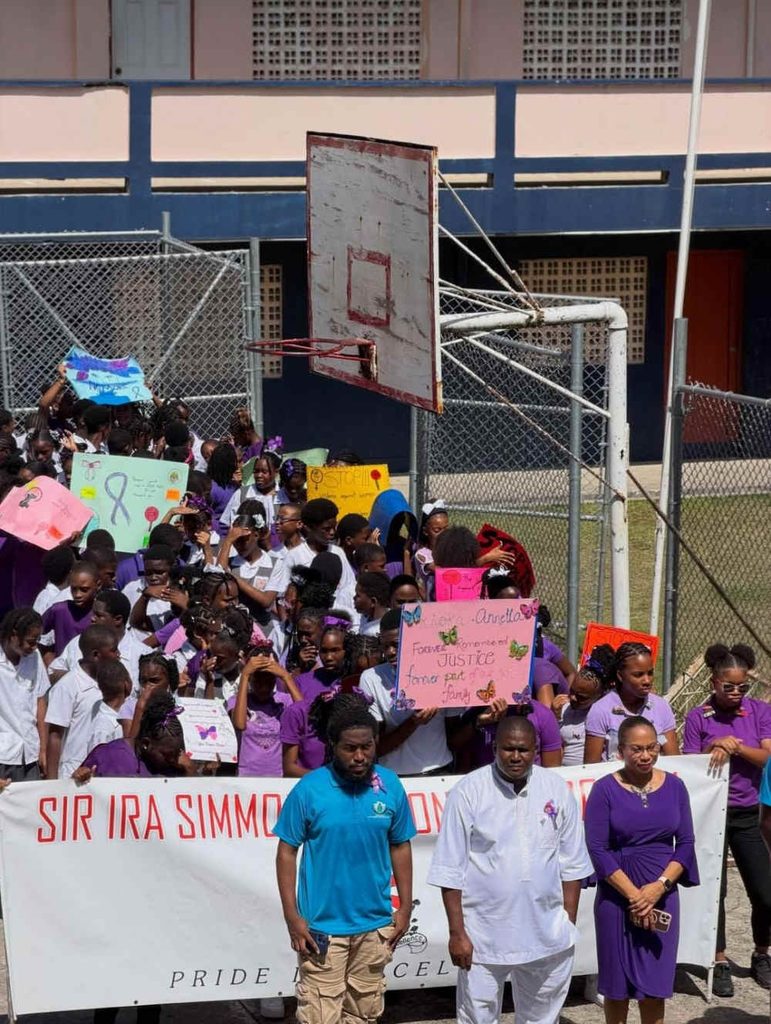
At Sir Ira Simmons Secondary, the demonstration began with a special assembly before students took their message across the school grounds.
Principal Martina Belizaire referenced recent femicides, including those of Merrissa Auguste and Joy St. Omer, as she urged students to stand against gender-based violence, saying the school was joining others in solidarity and sending a strong message against the violence.
Saint Lucia National Youth Council President Bernell St. Rose told students that violence, abuse and the loss of young lives must never be accepted as normal.
She challenged them to recognise their own ability to influence change through everyday choices — speaking up when something feels wrong, choosing respect over aggression and kindness over cruelty.
St. Rose also directed a message specifically to young men, telling them that strength should be demonstrated through self-control, respect and knowing when to walk away. Young women and girls, she stressed, deserve to feel safe, making the march more than a symbolic exercise but a public statement.
Later Friday morning, students at neighbouring Castries Comprehensive Secondary School mounted their own demonstration, marching with placards and chanting calls for an end to violence.
Visual Arts teacher Craig Prescott helped students create some of the placards and said involving them directly in designing the messages, marching and chanting allowed them to take greater ownership of social issues and their responsibility in driving change.
CCSS Principal Marva Daniel led students in chants of “No Means No” and “Stop the Violence,” while Vice Principal Ann Gifford-Elcock said the school was taking a clear stand for the right of every person to feel safe and reject violence.
Following the march, Health and Family Life Education teacher Judelia Medard-Santiesteban raised another dimension of the issue — the influence of family environments on attitudes toward women and girls.
She suggested that some violent behaviour may be rooted in dysfunctional family relationships and behaviours modelled during childhood, arguing that young people who grow up around harmful attitudes can replicate them in their own relationships.
The demonstrations placed students at the centre of a wider national conversation about violence against women, with both schools using the morning’s activities to reinforce messages of respect, personal responsibility and safer communities.