


Saint Lucia is facing an increasingly complex water situation, with meteorological officials warning of a deepening drought, even as water resource managers point to encouraging short-term rainfall trends.
Director of Meteorological Services Vigil Saltibus, speaking at a WASCO press conference, said the island remains under the influence of a strong Atlantic high-pressure system, suppressing meaningful rainfall and contributing to a growing hydrological deficit.
“We are experiencing a high impact dry season characterized by atmospheric stability, which is limiting rainfall to brief, shallow showers that do not support environmental recovery,” Saltibus explained.
She noted that Saint Lucia entered 2026 with a 37.4 per cent rainfall deficit, which has worsened to nearly 39.7 per centas of February. The current water year has now been ranked the second driest on record.
The situation has left topsoil severely dry, absorbing limited rainfall before it can replenish key water sources such as the John Compton Dam, which remains under pressure.
However, Director of the Water Resources Management Agency (WRMA), Jason Ernest, offered a more nuanced perspective, noting that recent rainfall activity has been relatively strong, though insufficient to address deeper water concerns.
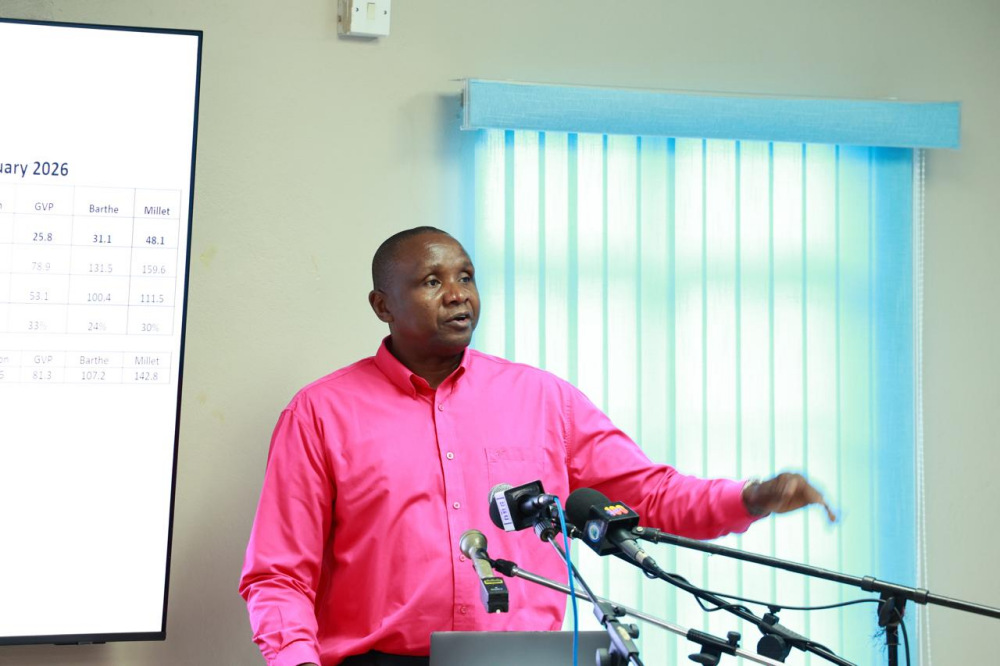
“As an agency, we’re actually pleased with what we’ve been seeing in terms of rainfall,” Ernest said. “Over the past weeks, rainfall has been consistent, though short in duration. From a meteorological and agricultural perspective, we are not in a severe drought zone.”
According to Ernest, several monitoring stations recorded significant rainfall totals for March so far, including Millet: 102.8 and Union: 63.2 mm
These figures represent 50 to 70 per cent of average monthly rainfall in some areas, a marked improvement compared to February, which saw significantly lower totals, according to the WRMA.
A particularly heavy rainfall event on March 14 delivered over 20 mm of rain at multiple stations, temporarily boosting river flows and pushing water levels at the John Compton Dam above the spillway.
Despite these gains, Ernest stressed that the island remains in a hydrological drought, where groundwater recharge and sustained river flows are critically low. “The rainfall we’re receiving is not penetrating the soil deeply enough to recharge groundwater,” he explained. “Most of it remains in the topsoil or is lost through evaporation and runoff.”
He added that while rivers may experience short-term increases in flow, these quickly return to low base levels due to the lack of groundwater support. “This is the key issue, WASCO relies on hydrological resources, not just rainfall totals,” Ernest said.
The John Compton Dam (JCD) has benefited from recent rainfall, but Ernest noted that this is largely due to surface runoff, not sustained recharge. “Only the dam can effectively store this water. In other systems, much of it is lost to the sea, especially when turbidity forces shutdowns in treatment operations,” he said.
Chief Operations Officer of WASCO, Aly Anthony, confirmed that while the reservoir is currently at spillway level, storage gains remain limited. “We’re happy with the improvements, but they are not sufficient for long-term security,” Anthony said, warning that water rationing and trucking may become necessary if dry conditions persist.
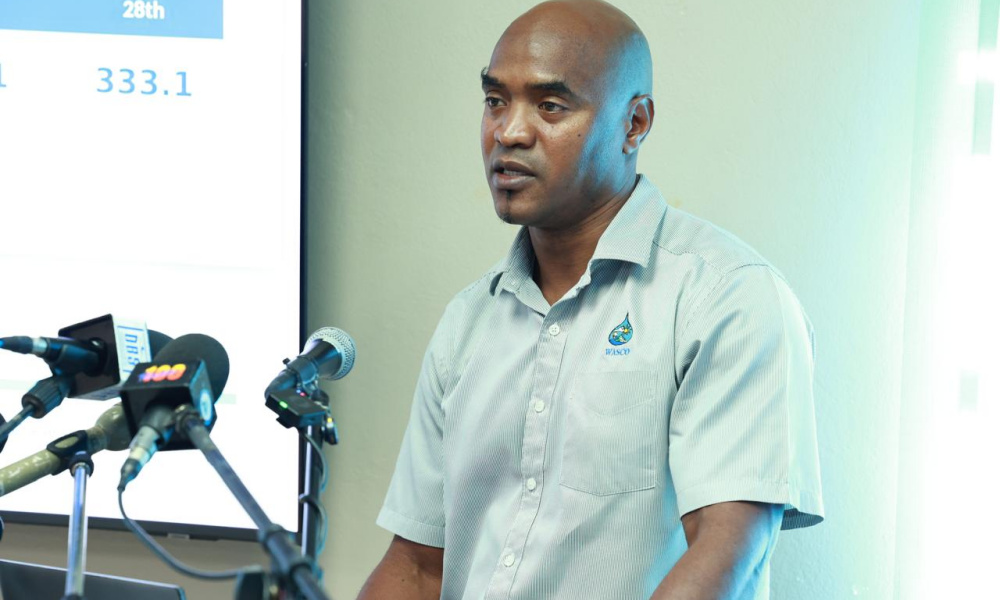
Both officials emphasized the importance of water conservation and climate adaptation measures, particularly rainwater harvesting.
Ernest highlighted that even a single rainfall event could yield hundreds of gallons of water for households equipped with harvesting systems. “This is an opportunity for residents to supplement their water supply,” he said. “Every rainfall event can serve as a recharge for household storage.”
Saltibus also warned of increased bushfire risk due to dry vegetation and brisk winds, as well as hazardous sea conditions, with swells ranging from 7 to 11 feet along the east coast.
Forecasts suggest a continued likelihood of below-normal rainfall through the remainder of the dry season, which runs until May.
While officials remain cautiously optimistic, they agree that Saint Lucia remains in a precarious position, requiring close monitoring, public cooperation, and proactive water management strategies. “We are seeing some positives,” Ernest said, “but from a hydrological standpoint, we are not out of the woods yet.”