


The Government of Saint Lucia is intensifying efforts to modernize public asset management, launching targeted training aimed at creating a comprehensive national asset registry to improve disaster response, financial reporting, and long-term infrastructure planning.
The Ministry of Finance, through its National Integrated Planning and Programme (NIPP) Unit, has commenced specialized Public Asset Management training, beginning with the Ministry of Education. The initiative forms part of a broader effort to strengthen accountability and resilience within the public sector.
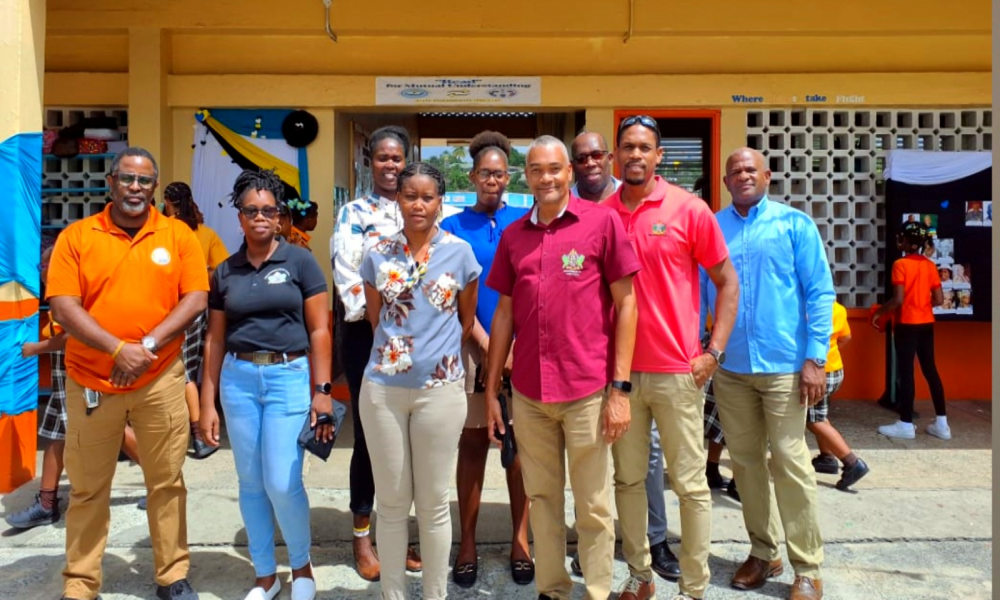
Deputy Director of Finance, Alison Griffith-McDiarmed, underscored the importance of establishing a reliable asset baseline to support both fiscal management and disaster preparedness.
As a government, our fundamental information is knowing how many assets we have. We cannot put it on a balance sheet because we cannot even start with a simple registry in each ministry. Therefore, we need to capture it not just for capturing’s sake but in a way that is usable, where various persons can access that information in one portfolio, a database, and apply it whether for social planning, engineering, or determining priority areas for government focus,” she explained.
The Ministry of Finance has established Public Asset Regulations under the Public Finance Management framework, providing clear guidelines on how government assets are to be classified, recorded, procured, maintained, and disposed of.
Director of the NIPP Unit, Haward Wells, said the training is designed to ensure agencies adopt a standardized and practical approach to asset management.
“The idea is to get participants trained in the use of the Public Asset Management System. It becomes a symbiotic relationship — they capture data that supports their everyday operations and simplifies tracking developments within buildings and facilities. This is the first iteration of the training, and we intend to roll it out across other agencies with primary responsibility for government assets,” Wells noted.
Participants are being introduced to the Public Asset Management System (PAMS), a web-based platform that supports asset tracking and long-term infrastructure planning. Workshop facilitator and Civil Engineer at the NIPP Unit, Fabian Felix, highlighted the system’s dual focus.
“The system has two major components. One is long-term planning, which examines infrastructure systems across approximately 15 sectors. These systems interact, and what happens in one sector affects another. This allows us to project national infrastructure needs for 2030, 2050, and beyond. The second component addresses risk and vulnerability, enabling us to assess climate hazards impacting both current and future infrastructure systems,” Felix explained.
Hubert Harte, Director of Works for the Plant and Equipment Unit within the Ministry of Education, emphasized the practical value of the initiative. With more than 150 facilities under his unit’s care, he said data-driven decision-making is critical.
“What we hope to implement is on-site data gathering using a common platform. Our officers can go out, collect information in real time, especially during emergencies, and submit instant reports to decision-makers within the Ministry,” Harte stated.
The Public Asset Management System is expected to improve transparency, enhance fiscal sustainability, and ensure that Saint Lucia is better positioned to quantify, manage, and protect its national assets in the face of growing climate and economic challenges.